Glass Mosaic, Ceramic or Stone: Choosing Pool Tiles
Full shell or waterline band, glass or ceramic, and what sits under the tile — the choices that decide how a pool finish looks and how long it lasts.
The tile is the part of a pool you see and touch every day. It is also where problems underneath show up first: tiles that lift, crack or craze within a few seasons are almost always a sign of what was done — or not done — before they were laid.
First decision: full shell or waterline band
- Fully tiled shell. The whole interior is tiled. It is the most durable and colour-stable pool finish and the easiest to keep clean.
- Waterline band over plaster. Tile runs along the waterline, where scum and oils collect, with a plaster or aggregate finish below. It costs less up front, but the finish below the band has a shorter life.
Glass mosaic
Small-format glass tiles give deep, reflective colour that changes with the light. Because the pieces are small, glass mosaic follows tight curves well — which is why it’s the usual choice for infinity edges, steps, benches and lagoon-style free-form shapes. It asks more of the tiler: it’s less forgiving of an uneven bed.
Ceramic and porcelain
Ceramic and porcelain are more forgiving to lay and lower in cost than glass. They come in larger formats, which suit straight-sided pools and give a cleaner, more architectural look. Porcelain is denser and absorbs less water.
Natural stone
Stone is used mostly around the pool: surrounds, raised spa edges, feature walls and coping. It has to be chosen for wet-area slip resistance, not appearance alone, and some stones need sealing.
Decks and steps: grip first
Any surface people walk on wet — steps, ledges, the deck — must be specified for grip. A beautiful polished tile on a pool step is a safety problem.
What sits under the tile matters most
A good tile on a poor base will fail. Three things decide how long the finish lasts:
- A flat, sound substrate — the shell is checked and prepared before tiling begins.
- Waterproofing and adhesive chosen together so they bond and work as one system.
- Grout and movement joints that let a large tiled area expand and contract without cracking.
It also matters when tiling happens: after the structural shell is complete, the filtration is installed, and the pool has been water-tested. And mosaics on curves should be laid to a setting-out plan, not started in a corner and adjusted at the end.
Seeing the finish
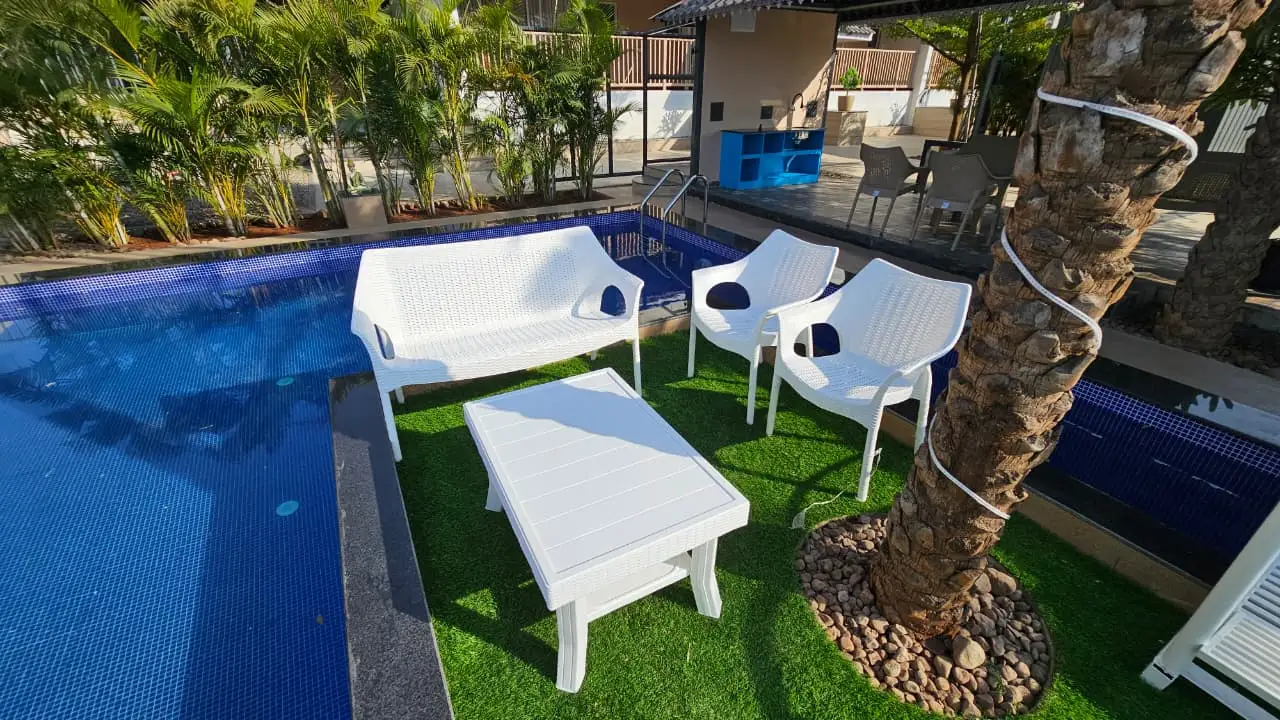
The blue mosaic free-form pool at Takawe Resort, Kamshet, and the pool at AK Gemak Resort, Kolhapur, show PBJ Infra’s tiling in finished, in-use pools.
Choosing yours
At PBJ, the tiling scheme is chosen during pool design, and the same team that builds the shell lays the tile. Read more about pool tiling and finishing, swimming pool construction and lagoon pools.
Planning a pool? Talk to PBJ about pool tiling →
Related work
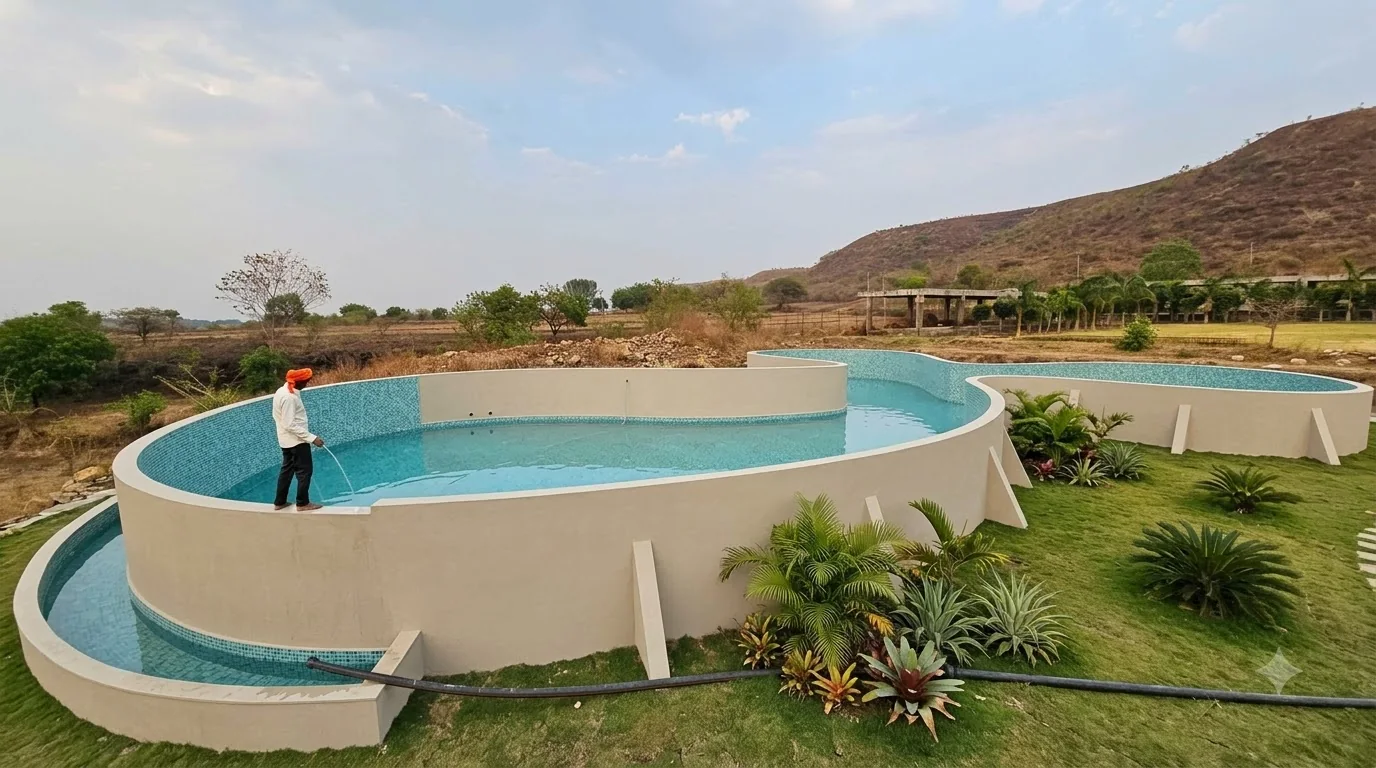
Swimming Pool Tiles
The finishing stage of a pool build — ceramic, porcelain, glass mosaic and natural-stone tiling for the shell, waterline and surround, plus coping and deck finishes, executed by PBJ's in-house team.
View Service →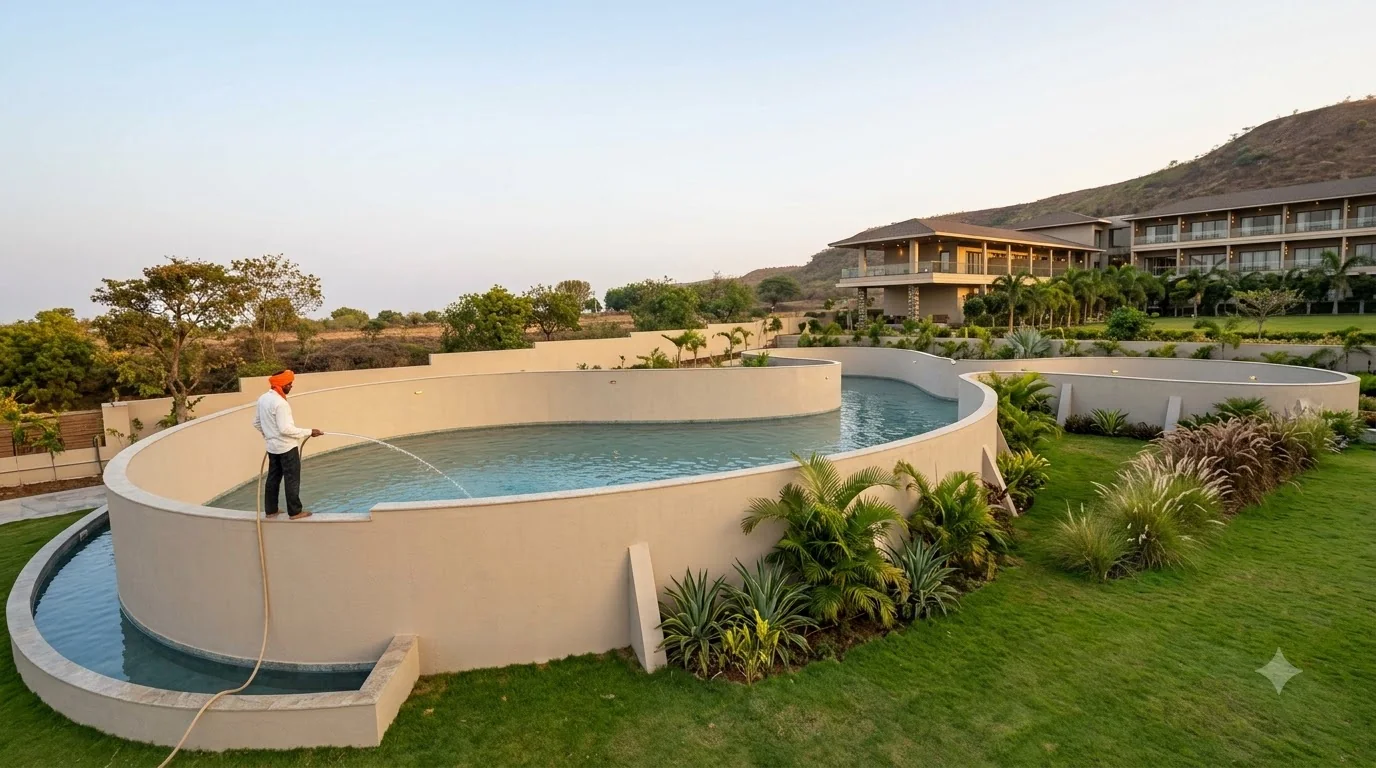
Swimming Pool Construction
Infinity, glass-wall, indoor and residential pools — engineered, built and finished in-house by PBJ Infra, with advanced filtration and a 5-year structural warranty.
View Service → Lagoon Pool Construction
Naturalistic, lagoon-style pools with beach entries, free-form edges, rock and planting integration — engineered as real swimming pools, finished to read as natural water. PBJ's Trusted Lagoon line.
View Service →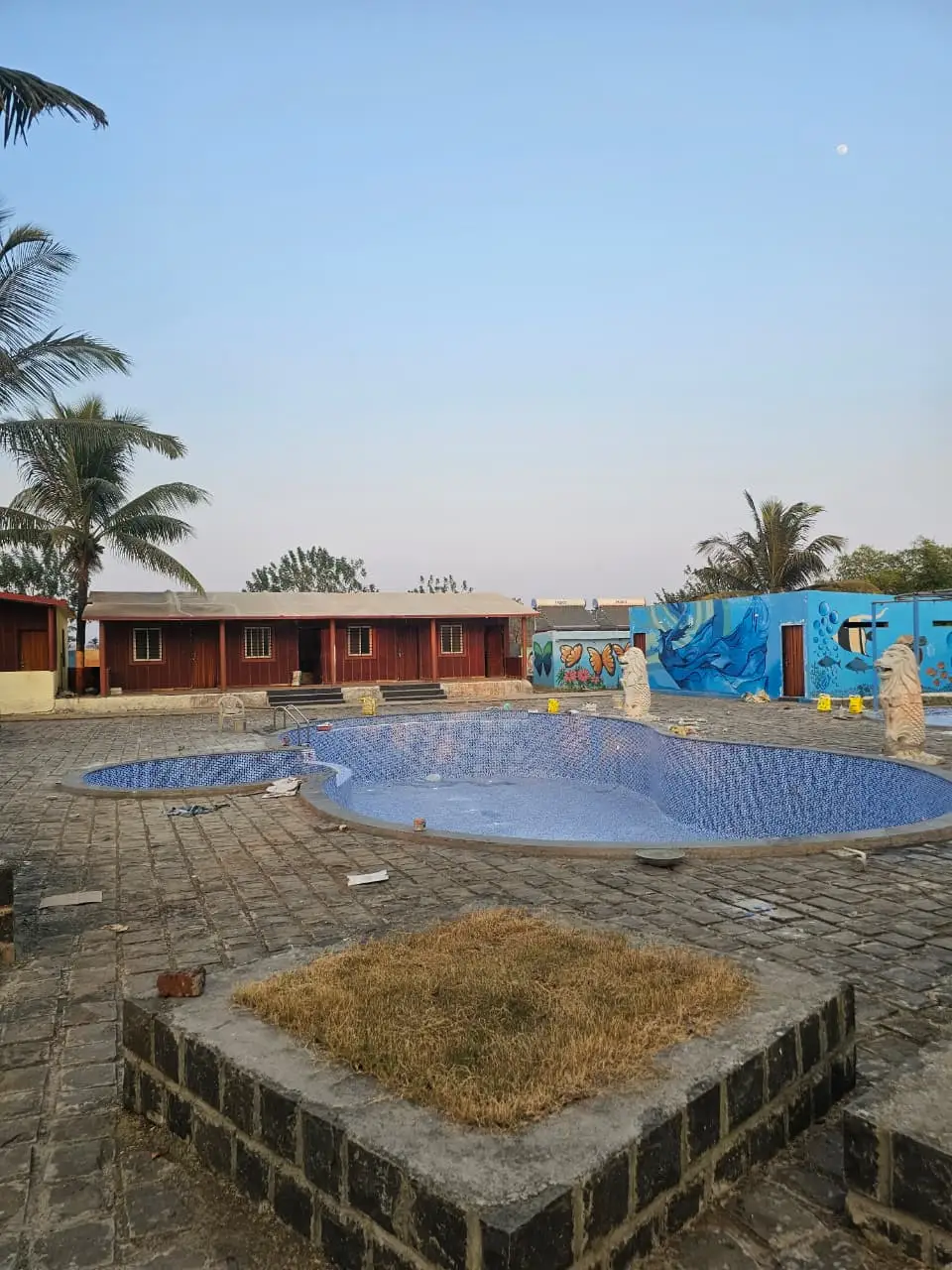
Takawe Resort
Kamshet, Pune View Project →