Infinity Pool vs Skimmer Pool: What's the Real Difference?
How a vanishing-edge pool and a skimmer pool actually work, what each needs from the structure, and why an infinity edge has to be engineered before the shell is poured.
Both pools hold water and both can look excellent. The difference is how the water leaves the surface — and that one decision shapes the structure, the filtration and the cost of the build.
How a skimmer pool works
A skimmer pool holds its water at a fixed level. Surface water — where leaves, dust and oils collect — is pulled through wall-mounted skimmers and into the filtration system, then returned to the pool. It is the conventional design, straightforward to build and to service, and it suits most residential pools.
How an infinity pool works
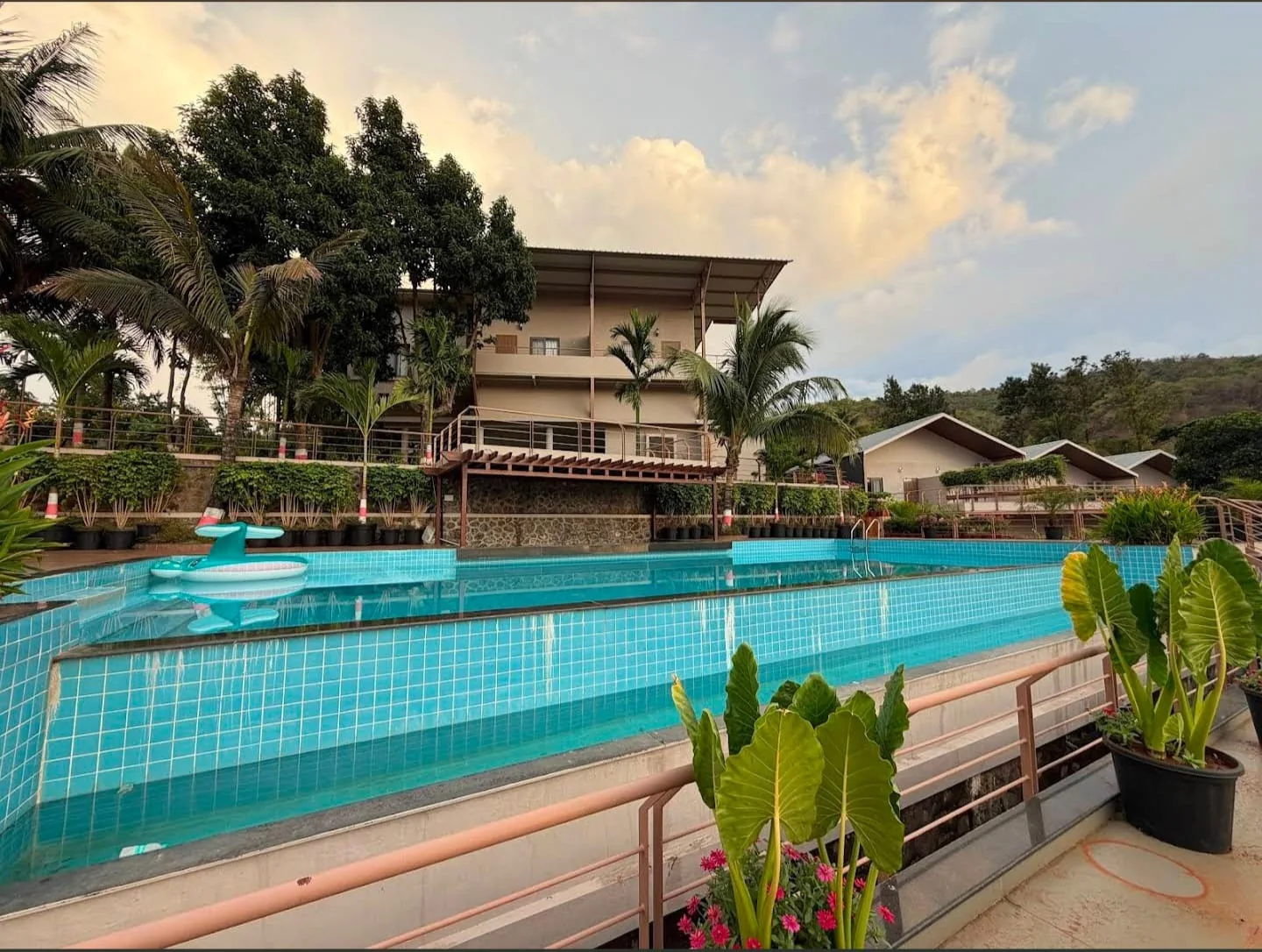
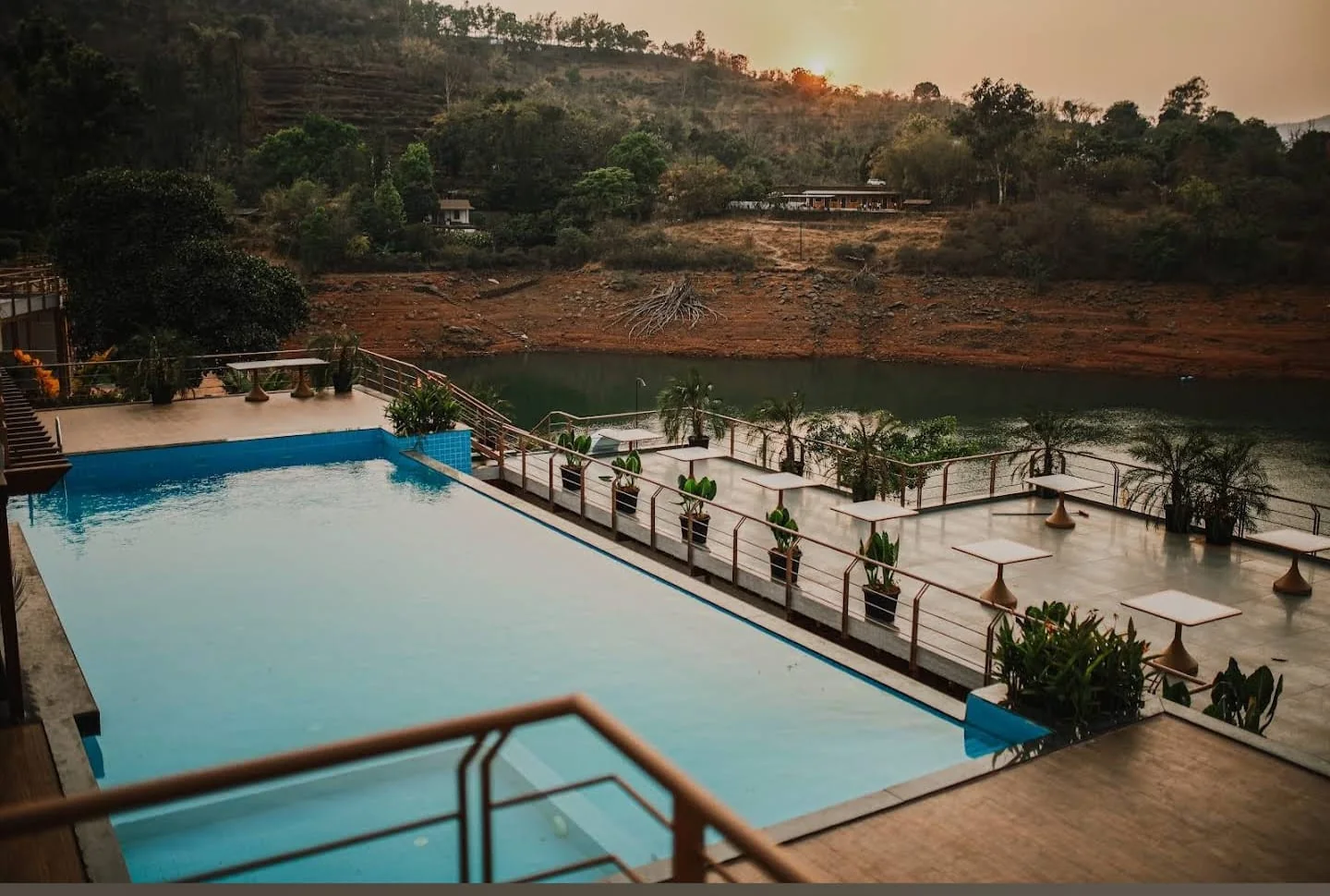
An infinity (or vanishing-edge) pool lets water flow continuously over one or more edges into a catch basin below. From the right viewing angle the water appears to meet the horizon. What you don’t see is the machinery that makes it possible: the water that spills over the edge collects in a basin, drops into a balance tank, and is pumped back through filtration to the pool.
What an infinity edge needs from the structure
This is the part that is easy to underestimate. An infinity edge is not a lowered wall:
- The edge, the catch basin and the overflow path have to be engineered together, and sized for the volume of water they must handle.
- The balance tank has to hold the water that is temporarily out of the pool — including the surge when swimmers get in.
- All of it needs to be designed before the shell is poured, not added afterwards. Retrofitting a vanishing edge into an existing shell is far harder than building it in.
That is why PBJ Infra designs the shell, the filtration plant and the finish together from the first 3D visualisation, rather than handing the pool between separate contractors.
Which one is right for you?
- Choose a skimmer pool if you want a simpler build and easier servicing, and the view doesn’t ask for a vanishing edge.
- Choose an infinity pool where the site gives you something worth looking out to — a valley, a lake, a coastline — and you are prepared for the additional structural and hydraulic work behind the edge.
A sloping or open site often suits an infinity edge; a flat, enclosed plot usually doesn’t need one.
Getting a real answer for your site
The right choice depends on your plot, the view and the budget. PBJ doesn’t publish fixed pricing — cost follows scope, size and finish level — and a project-specific estimate is prepared during consultation.
For an example of an infinity-edge pool built as part of a larger site, see the Jalashay Resort at Panshet, or read about swimming pool construction and pool filtration systems.
Planning a pool? Start a consultation →
Related work
Lagoon Pool Construction
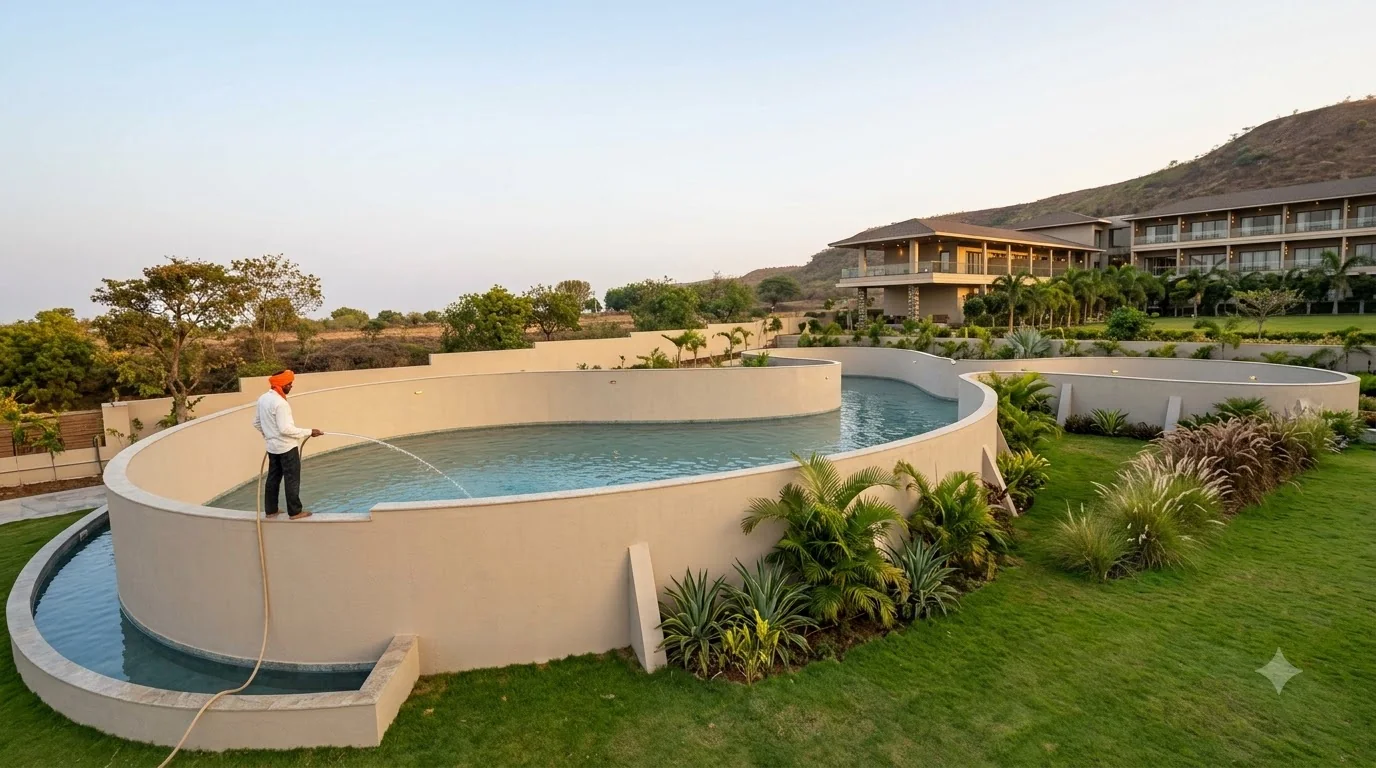
Naturalistic, lagoon-style pools with beach entries, free-form edges, rock and planting integration — engineered as real swimming pools, finished to read as natural water. PBJ's Trusted Lagoon line.
View Service → Swimming Pool Construction
Infinity, glass-wall, indoor and residential pools — engineered, built and finished in-house by PBJ Infra, with advanced filtration and a 5-year structural warranty.
View Service →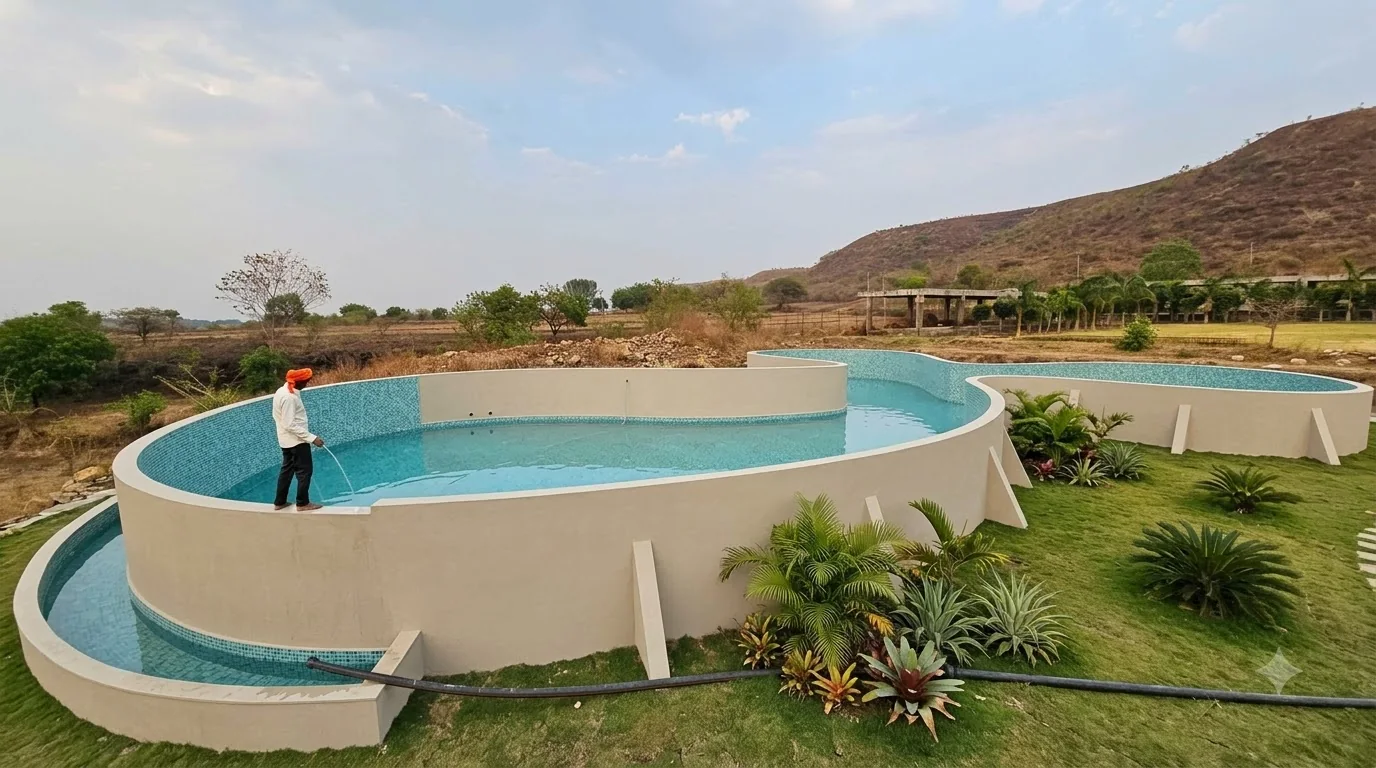
Pool Filtration Systems
Circulation and filtration plant for swimming pools — pump, filter and dosing sizing, plant-room layout, installation and commissioning, designed in with the pool rather than added afterwards.
View Service →