What Happens to a Site Before Construction Starts?
Survey, grading, drainage, roads and utilities — the land development stage explained, and why it should be set up for what will actually be built.
Before a foundation is dug, a raw plot has to become a buildable site. This is land development, and it is the least visible stage of any project — most of it ends up underground or under a lawn. It is also the stage that makes every later one easier or harder.
1. Survey: know what the land actually is
A topographic survey records levels across the plot; a boundary check confirms exactly where the plot ends. Everything after this — grading, drainage falls, building positions — is set out from the survey, so errors here carry through the whole project.
2. Clearing
Vegetation, debris and any existing structures are cleared. Trees worth keeping are identified at this stage, not after the machines arrive.
3. Grading: drainage decides the shape
Cut-and-fill brings the ground to workable levels. The important principle is that grading follows the drainage strategy, not the other way round. Levels are set so water runs away from where buildings will sit and toward where it can be collected or discharged. Filled ground is compacted in layers so it doesn’t settle under a slab later.
On sloping sites, this is also where slope stabilisation or retaining is planned.
4. Drainage and stormwater
Surface channels, sub-surface drains, culverts under roads and any retention are built so the site sheds water predictably. A site with no drainage in place floods during the monsoon — and construction stops.
5. Access and internal roads
Roads have to survive heavy construction traffic and then serve the finished development. Built to only one of those standards, they either fail early or have to be rebuilt.
6. Utilities
Water supply and storage, borewells, sewage treatment or disposal, and electrical distribution are routed to where the buildings will actually be. A water line laid before the layout is fixed often has to be dug up when the foundations go in.
Why the builder should prepare the site
When site preparation is done with the finished project in mind — floor levels, building footprints, service entries — nothing has to be redone. That’s why, on PBJ Infra’s own projects, land development is stage one of a four-stage process (Site → Structure → Systems → Signature), carried out by PBJ’s own team.
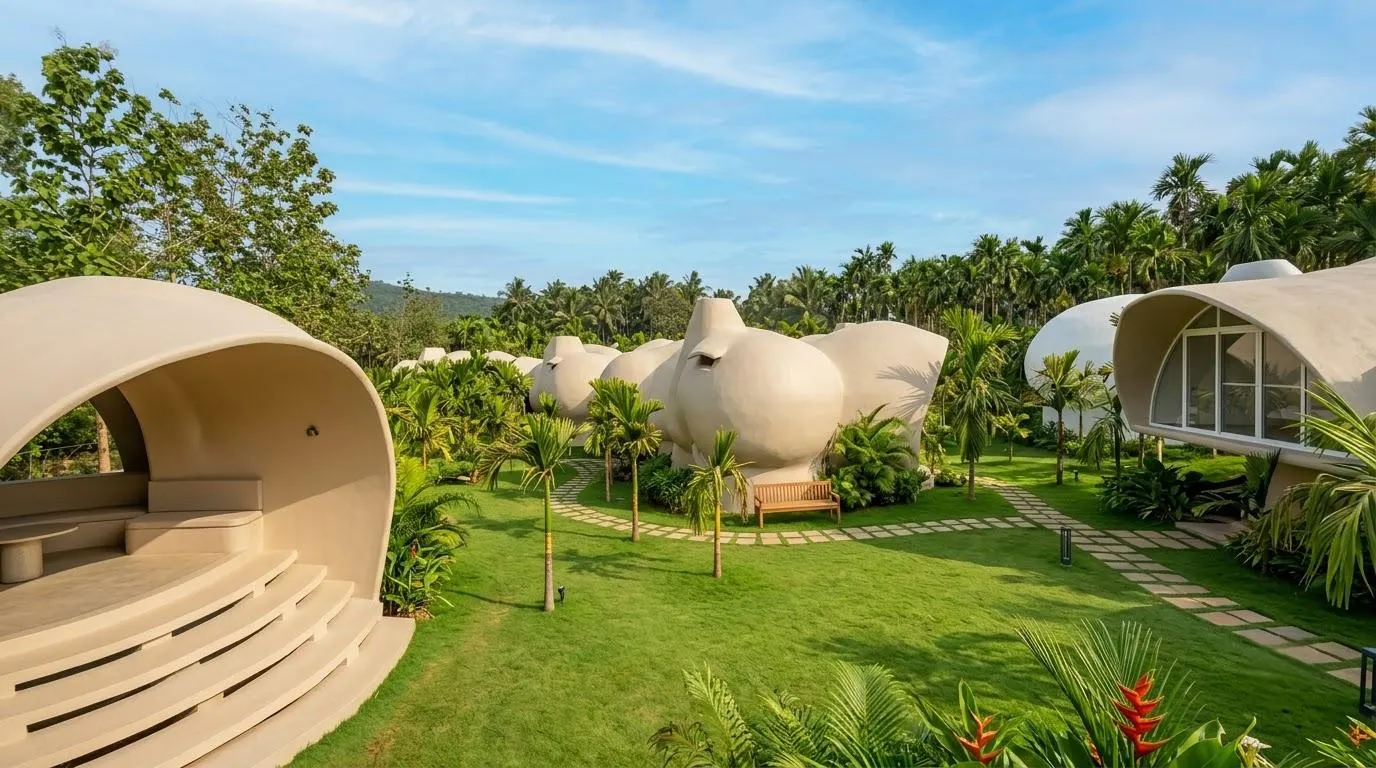
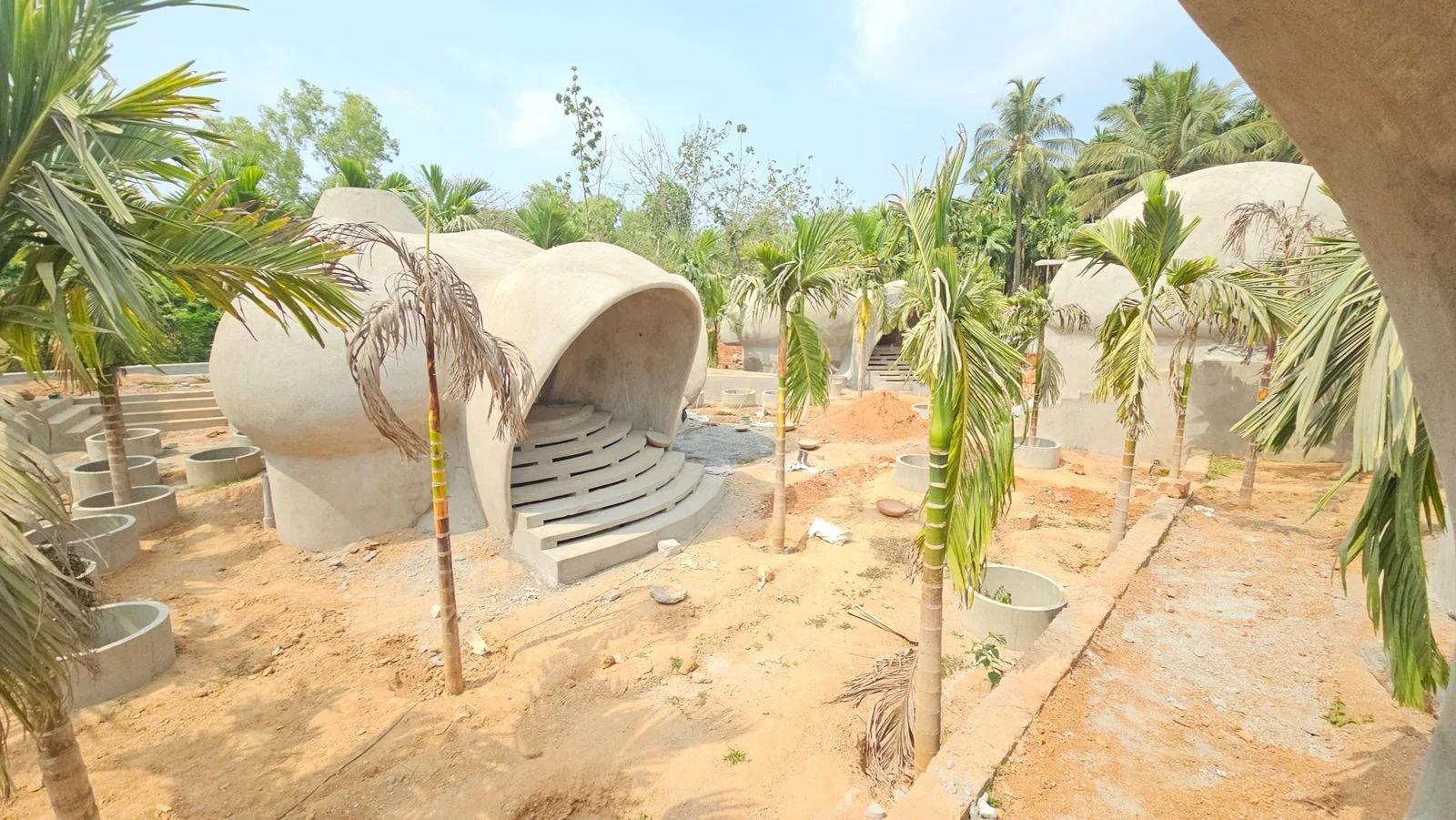
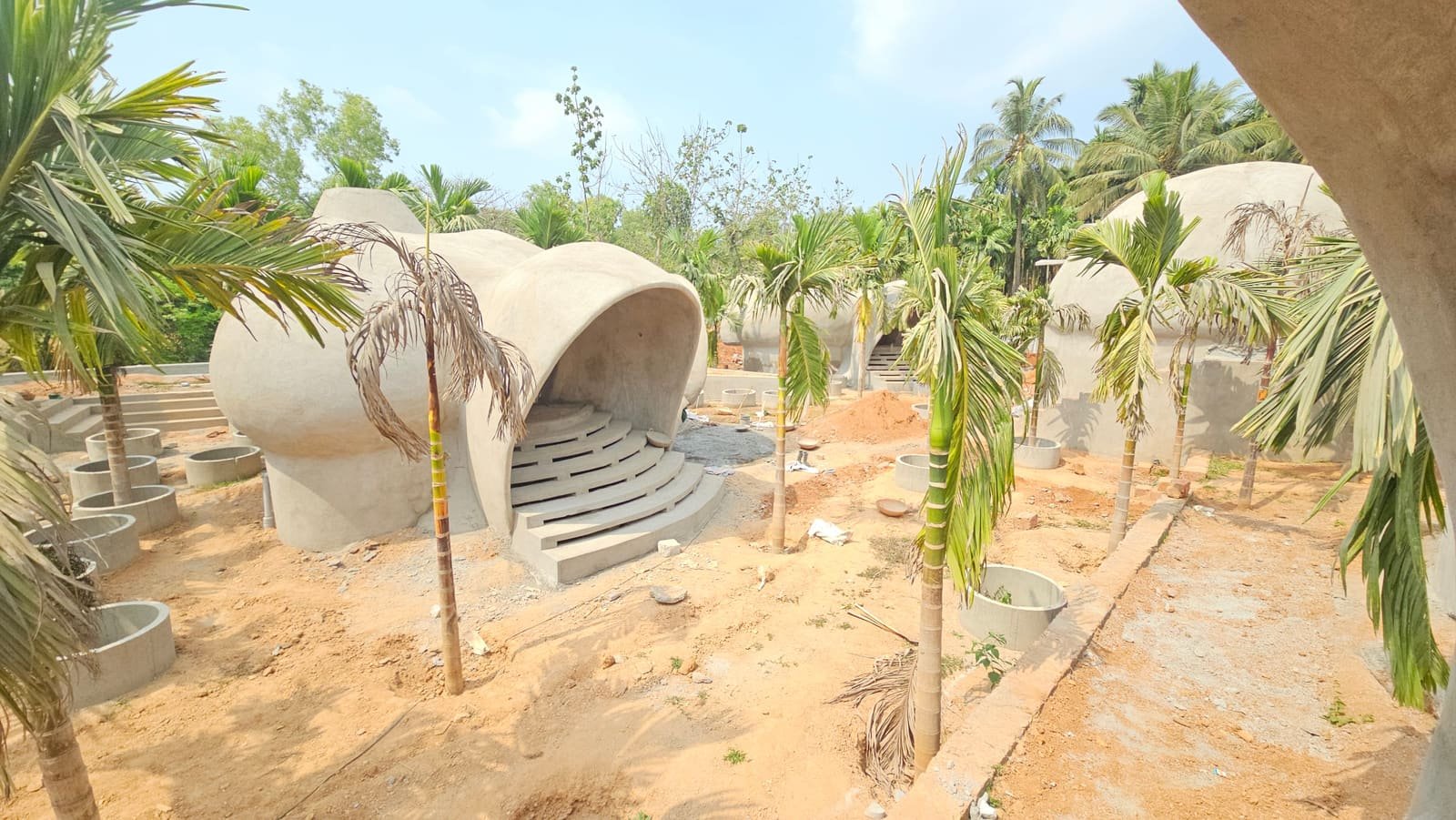
At AKAYA Resort, Gokarna, drainage and paths were laid around the dome cluster as it went up — site work and structure progressing together.
If PBJ prepares a site that another contractor then builds on, they inherit a graded, drained and serviced plot with as-built information.
Starting with the site
Read more about land development, which underpins PBJ’s resort and farmhouse work on rural and greenfield sites. Permits and approvals are handled directly.
Have a plot to prepare? Talk to PBJ about site development →
Related work
Land Development
Turning raw land into a buildable site — survey and clearing, grading and levelling, access roads, drainage, water supply, sewage and utility infrastructure ahead of construction.
View Service →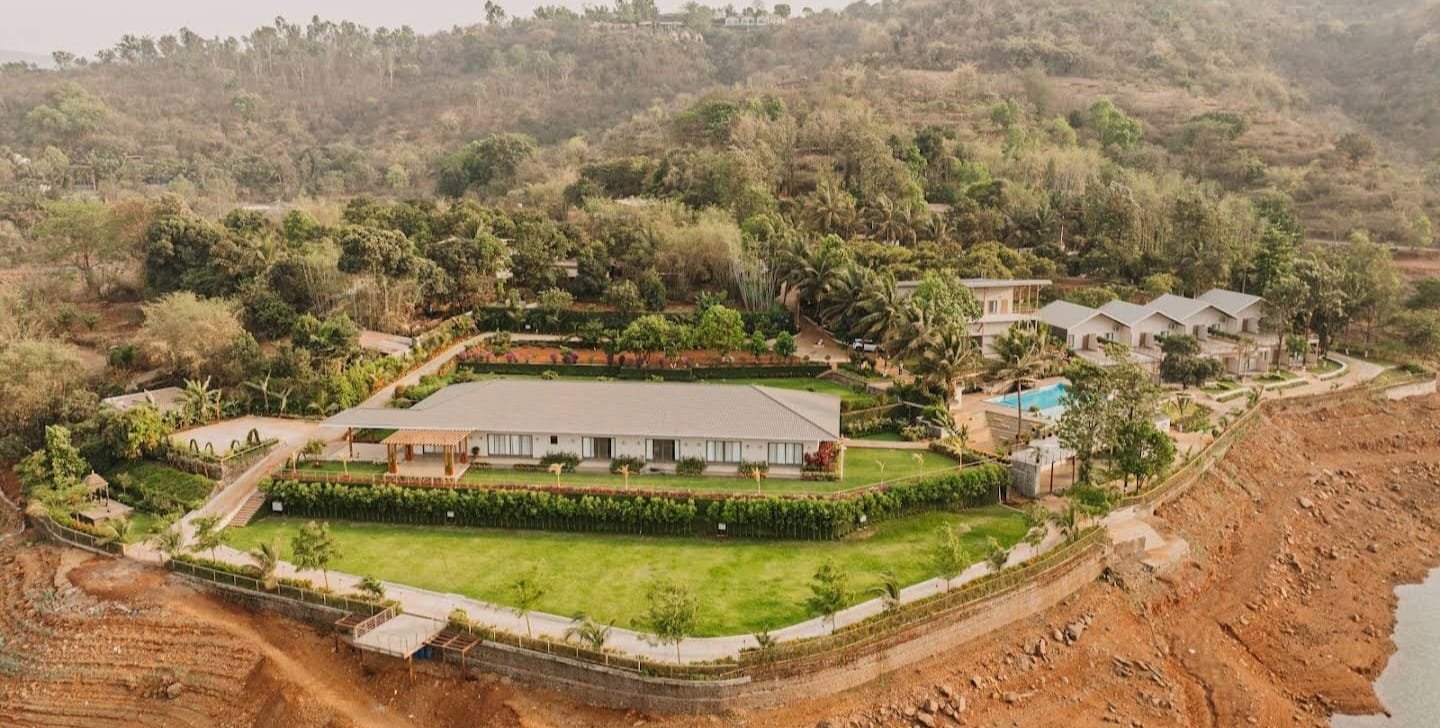
Resort Construction
End-to-end resort and hospitality construction — guest accommodation, central facilities, pools and water features, landscaping and site infrastructure, delivered in coordinated phases.
View Service →
Farmhouse Construction
Custom farmhouse construction on agricultural and weekend-home land — main residence, guest and staff quarters, pool and landscaping, water and power infrastructure, built end-to-end.
View Service →