Cob House Pros and Cons: Is It Right for Your Plot?
Cob walls are thick, natural and sculptural — and they need the right soil, the right detailing and a patient build programme. How to decide.
Cob is building with earth: a stiff mix of subsoil, sand and straw, built up by hand into thick, load-bearing walls with no bricks and no formwork. People who choose it usually want two things — a natural, low-embodied-energy home, and the soft, sculpted look that only a hand-built earth wall has.
It is a real building method, not a novelty. But it suits some projects better than others.
Where cob works well
- Thermal mass. Thick earth walls are slow to heat and slow to cool, which evens out the daily temperature swing.
- Sculptural freedom. Curved walls, rounded openings, built-in benches and niches come naturally.
- Local material. Much of the wall can come from the site’s own subsoil, if it’s suitable.
- Rural and farmhouse plots, where there’s space, and where the aesthetic fits the setting.
What it depends on
Natural builders sum up cob in one phrase: a good hat and good boots.
- Boots — the plinth. An earthen wall must start on a stone or concrete plinth, well clear of splash-back and standing water. Ground moisture is the main thing that damages cob.
- Hat — the roof. Wide eaves keep driving rain off the wall face. In a heavy-monsoon region, this is not optional.
- Breathable finishes. Lime or earthen plaster lets moisture move out of the wall. Cement render traps it, and the wall behind fails.
- The right soil. The clay-to-sand balance of the subsoil has to be tested before the mix is decided.
What to expect from the build
Cob is laid in lifts, and each lift needs drying time before the next goes on. The programme is longer than blockwork, and it runs better when the wall-building season is planned around the weather. It’s worth accepting that at the start rather than pushing against it.
When a hybrid is better
Not every part of a house benefits from cob. Long spans, bathrooms and wet areas, and service runs are often better in conventional construction. A hybrid — cob where mass and form matter, RCC or blockwork where they don’t — frequently gives the best result. It helps if one team builds both, so the junctions between earth and conventional work are detailed properly.
Is it right for you?
Cob is probably a good fit if you want a natural home, like the aesthetic, have suitable soil and can accept a longer build. If you need a fast programme, very large spans or a fully conventional finish, a conventional or hybrid build may serve you better — and a good contractor should tell you that honestly.
Talking it through
PBJ Infra offers cob house construction as a distinct service alongside conventional farmhouse construction, so both routes — and hybrids — are handled by one team. Consultation starts with the site, the subsoil and how much of the house should be cob.
Considering cob? Talk to PBJ about a cob house →
Related work
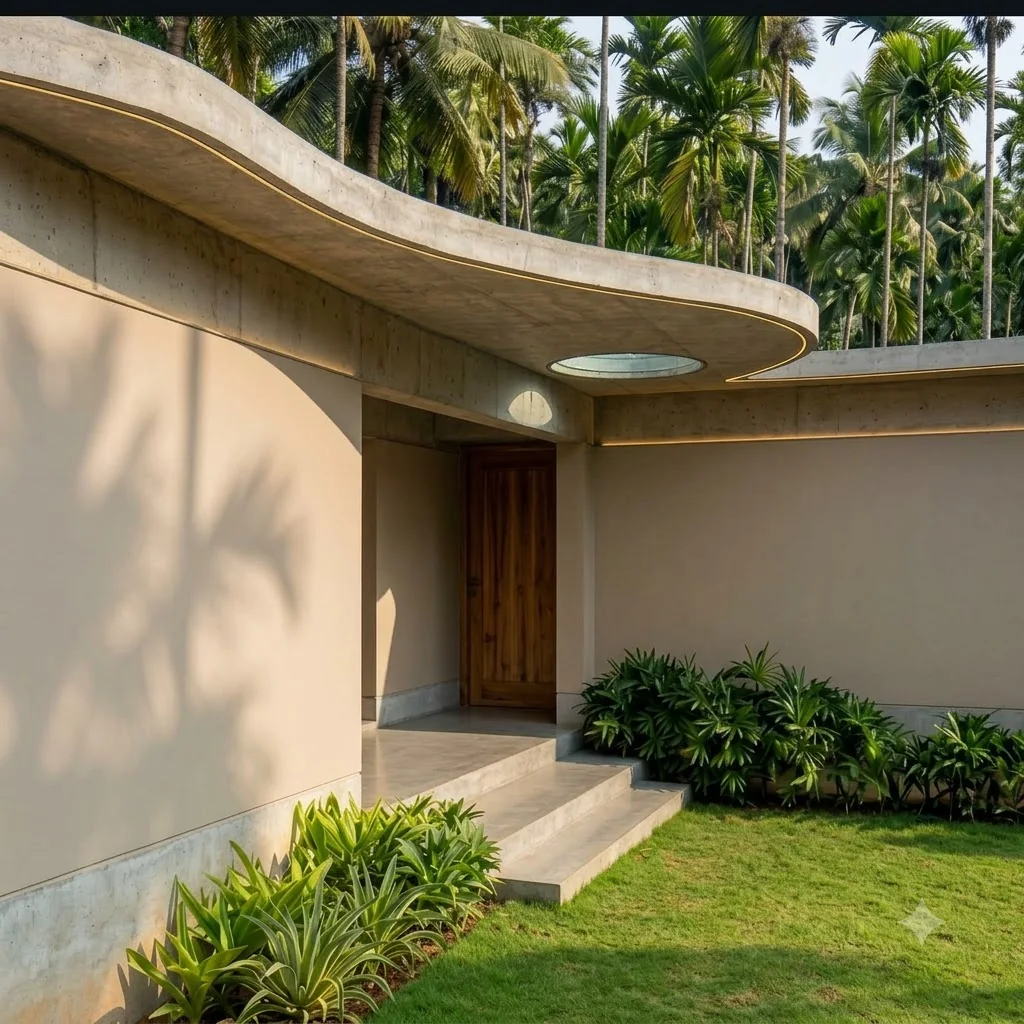
Cob House Construction
Natural building in cob — monolithic earth-and-straw walls with deep window reveals, sculpted forms and high thermal mass — offered as a deliberate residential service alongside conventional construction.
View Service →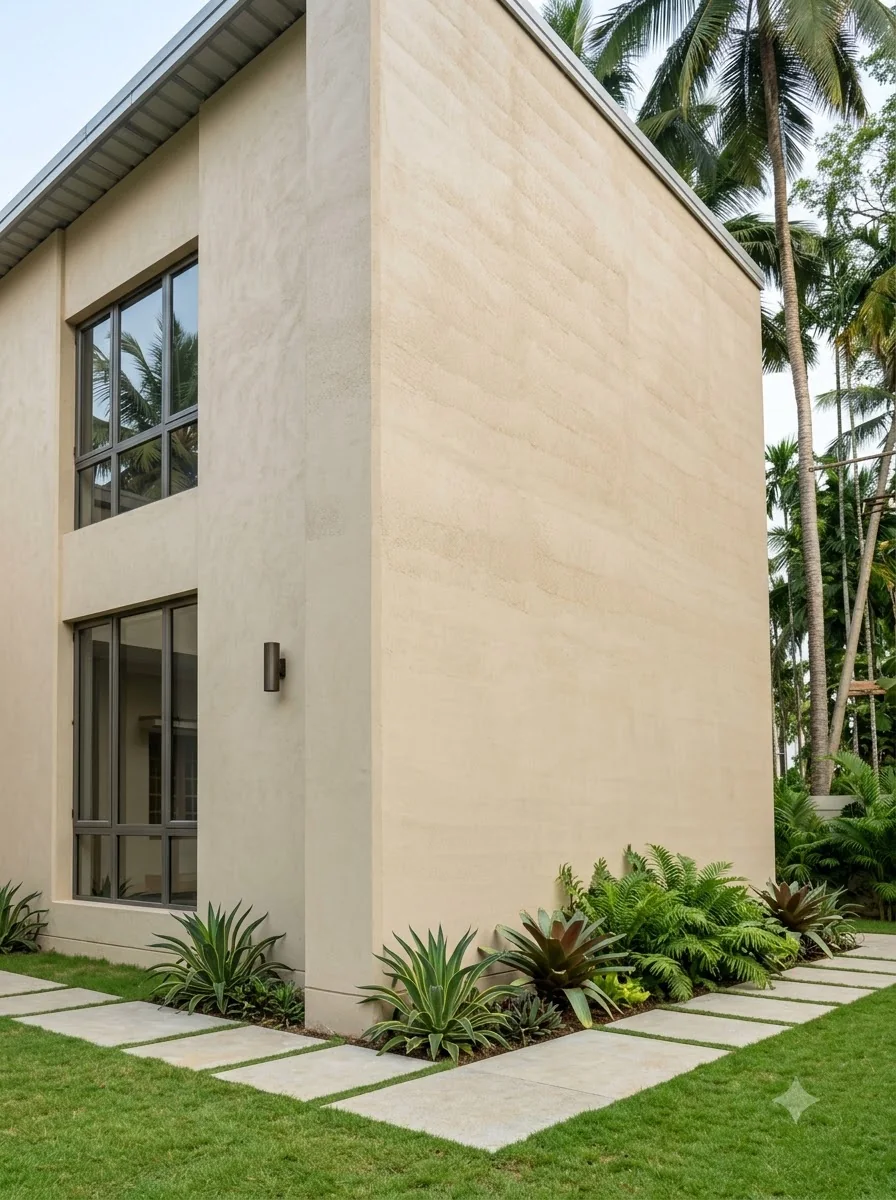
Farmhouse Construction
Custom farmhouse construction on agricultural and weekend-home land — main residence, guest and staff quarters, pool and landscaping, water and power infrastructure, built end-to-end.
View Service →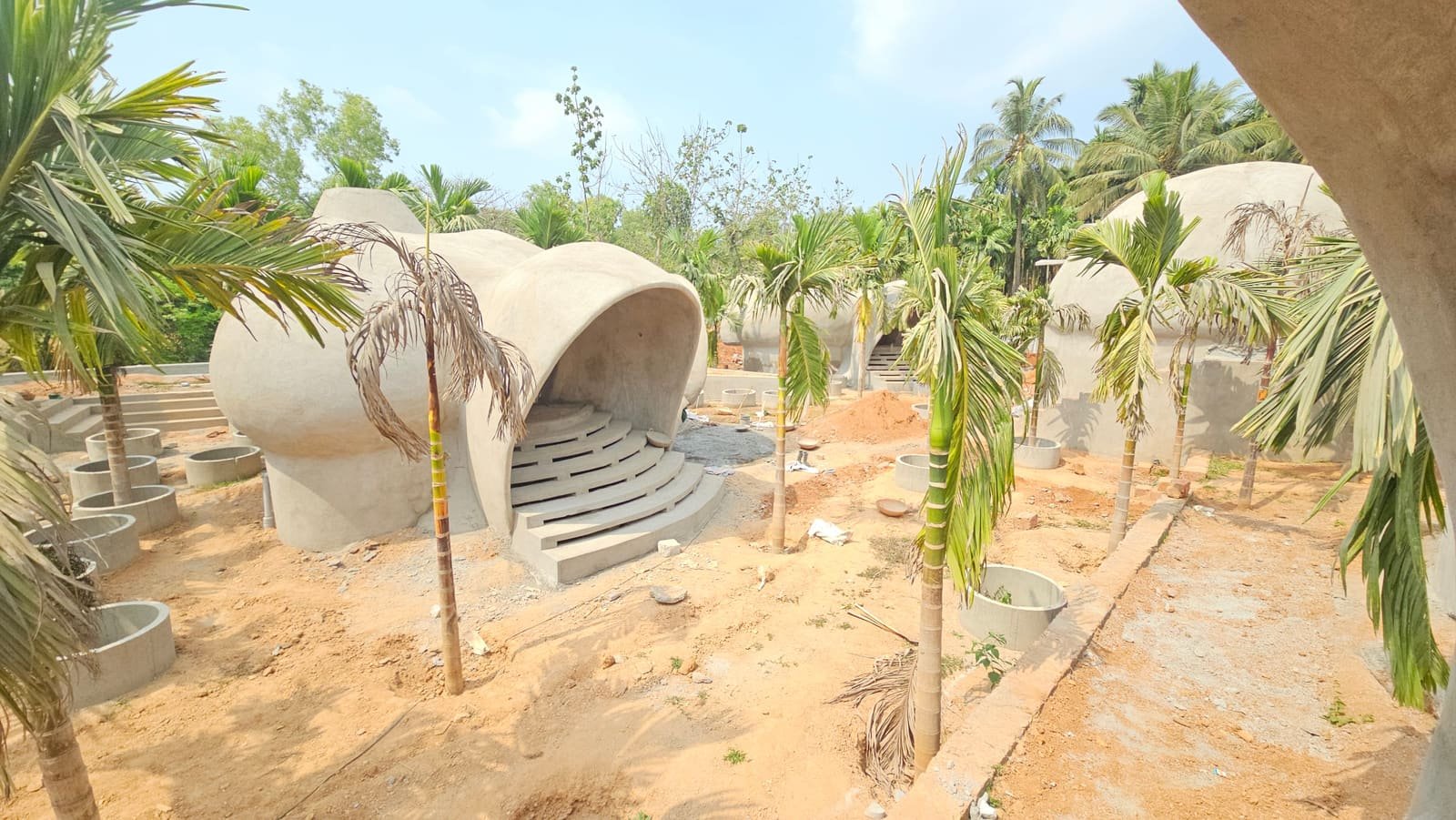
Land Development
Turning raw land into a buildable site — survey and clearing, grading and levelling, access roads, drainage, water supply, sewage and utility infrastructure ahead of construction.
View Service →